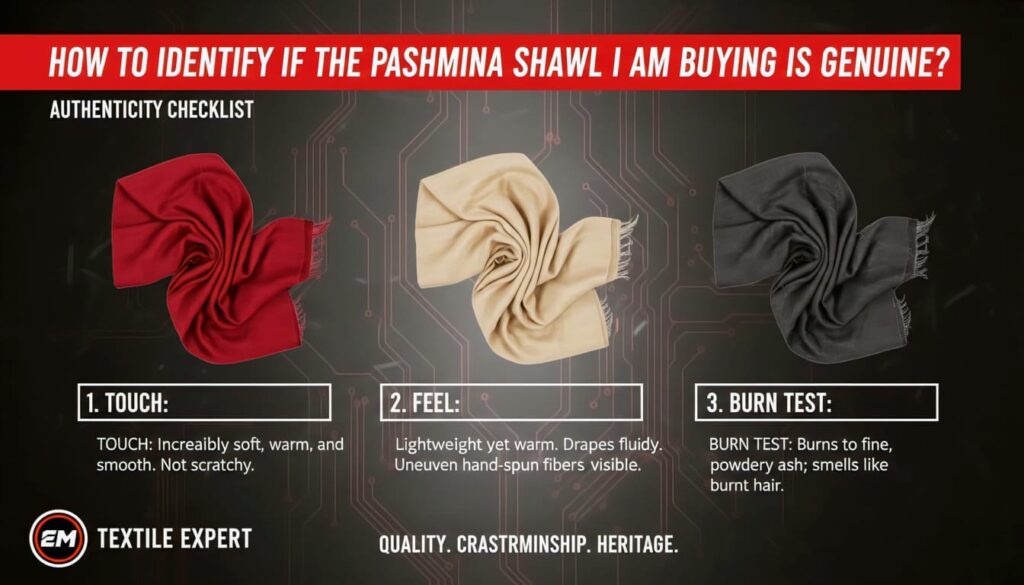
How to Identify if the Pashmina Shawl I am Buying Is Genuine?
Pashmina shawls have an almost mythical reputation luxuriously soft, feather-light, and timelessly elegant. Unfortunately, that reputation has also made them one of the most commonly misrepresented luxury textiles in the world.
If you’ve ever stood in a shop (or scrolled online) wondering how to identify if the pashmina shawl you are buying is genuine, you’re not alone. Many buyers pay premium prices for shawls that are actually viscose, acrylic, or ordinary wool blends masquerading as “pashmina.”
The good news? You don’t need to be a textile historian to spot the real thing. With a trained eye and a few practical tests, you can confidently separate authentic pashmina from clever imitations.
Let’s break it down—clearly, honestly, and without fluff.
What Genuine Pashmina Really Is (And Isn’t)
Before learning how to identify if the pashmina shawl you are buying is genuine, it’s essential to understand what true pashmina actually means.
Authentic pashmina is made from the ultra-fine undercoat of the Changthangi goat, found in the high-altitude regions of Ladakh and Kashmir. These goats survive extreme cold, and their soft under-fleece is hand-combed during the molting season.
Key facts:
- Fiber thickness is around 12–16 microns (finer than human hair)
- 100% natural, never synthetic
- Traditionally hand-spun and hand-woven
If a seller calls something “pashmina” but it’s blended with silk, wool, viscose, or acrylic, it may still be beautiful but it’s not pure pashmina.
Feel Test: The Softness That Can’t Be Faked
One of the simplest ways to identify if the pashmina shawl you are buying is genuine is by touch.
Genuine pashmina feels:
- Exceptionally soft, but not slippery
- Warm yet breathable
- Light as air when draped
Synthetic shawls often feel overly smooth or slick, especially viscose blends. Regular wool, on the other hand, may feel coarse or itchy by comparison.
Expert tip:
Rub the fabric gently between your fingers. Real pashmina warms almost instantly due to its natural insulation properties.
The Ring Test (Helpful, But Not Absolute)
You may have heard about the famous “ring test” pulling a shawl through a ring to see if it passes through easily.
Authentic pashmina usually passes through because of its fine fibers and light weight. However, don’t rely on this test alone. Some fine blends can also pass, while heavily embroidered real pashmina may not.
Use this test as a supporting clue, not final proof.
Check the Weave: Irregular Is a Good Sign
Machine-made fabrics are perfect. Handwoven pashmina is not and that’s a good thing.
Look closely at the weave:
- Slight inconsistencies indicate hand craftsmanship
- No uniform, factory-perfect pattern
- Edges may show subtle irregularities
If the shawl looks too flawless, it likely came from a machine.
Burn Test: Use With Caution
If you’re able to test a loose thread (never damage the shawl), the burn test can be revealing.
Genuine pashmina:
- Burns slowly
- Smells like burning hair
- Turns into soft ash
Synthetic fibers melt, smell chemical, and form hard beads. Of course, this test isn’t practical in stores but it’s useful knowledge if you already own the piece.
Price Reality: If It’s Cheap, It’s Not Genuine
This may sound blunt, but it’s one of the most reliable indicators.
Pure pashmina is:
- Rare
- Labor-intensive
- Handcrafted
That combination makes it expensive. If you see a “100% pashmina shawl” priced suspiciously low, it’s almost certainly not authentic.
A genuine pashmina shawl typically starts in the high hundreds and can go well into four figures depending on craftsmanship and design.
Labels, Certifications, and Origin Matter
When asking how to identify if the pashmina shawl you are buying is genuine, always look for transparency.
Trustworthy sellers provide:
- Clear fiber composition
- Origin details (Kashmir / Ladakh)
- GI (Geographical Indication) certification where applicable
Vague labels like “pashmina-style” or “pashmina feel” are red flags.
Watch Out for Common Marketing Tricks
Many sellers rely on confusing terminology. Here’s what to be cautious of:
- Cashmere ≠ Pashmina (related, but not identical)
- Silk pashmina = blend, not pure
- Viscose pashmina = marketing fiction
Blended shawls aren’t bad—but honesty matters.
Why Buying From Reputable Sellers Makes All the Difference
One overlooked way to identify if the pashmina shawl you are buying is genuine is simply who you buy it from.
Established sellers:
- Share their sourcing process
- Educate buyers
- Stand behind authenticity claims
If a seller avoids questions or overuses buzzwords, trust your instincts.
Final Thoughts: Buy With Confidence, Not Confusion
A genuine pashmina shawl isn’t just an accessory—it’s a piece of heritage, craftsmanship, and natural luxury. Once you know what to look for, the mystery disappears.
To recap:
- Trust your sense of touch
- Inspect the weave
- Question unrealistically low prices
- Look for transparency and origin
- Don’t fall for clever wording
When you understand how to identify if the pashmina shawl you are buying is genuine, you stop guessing—and start buying with confidence.
Frequently Asked Questions
Is cashmere the same as pashmina?
Not exactly. Pashmina is a finer, rarer form of cashmere sourced from specific goats and regions.
Can a genuine pashmina be blended?
Yes, but then it should be labeled honestly as a blend, not pure pashmina.
Do all real pashmina shawls come from Kashmir?
Traditionally, yes—especially those handwoven using Changthangi fiber.
Are online pashmina shawls trustworthy?
They can be, provided the seller is transparent, reputable, and experienced.


Nice